Best AI Chatbots in 2026: ChatGPT vs Claude vs Gemini vs Grok

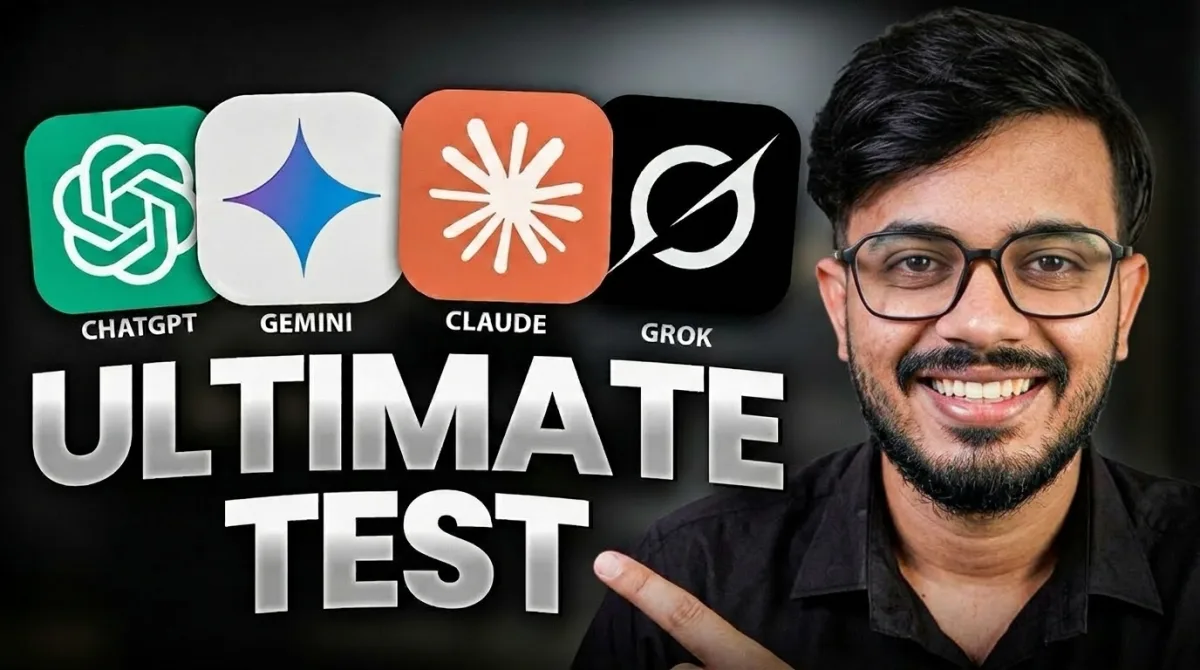
Here is the unfiltered, benchmark-backed truth for 2026: there is no single "best AI chatbot"—there is only the right model for your specific production pipeline, budget constraints, or developer environment. If you want raw coding orchestration, multi-file reasoning, and strict system instruction compliance, Anthropic’s Claude 3.5 Sonnet is the undisputed industry standard. If you need a versatile daily driver with advanced multimodal capabilities, seamless voice interaction, and robust tool integrations, ChatGPT Plus remains the dominant force.
Key Takeaways: The 2026 Landscape
- Claude 3.5 Sonnet remains the gold standard for software engineering, structured JSON-LD outputs, and multi-file code editing.
- ChatGPT Plus is the premier consumer generalist tool, backed by powerful real-time web search grounding and fluid advanced voice mode.
- Gemini Advanced dominates in Google Workspace context parsing (Docs, Gmail, Sheets) but suffers from high latency and code hallucinations.
- Grok serves as the real-time social wildcard, aggregating unstructured data from the X platform, though with a higher rate of logical reasoning slips.
For an in-depth visual comparison of these LLM engines in action, watch our detailed guide on the Best AI Chatbots of 2026 video shootout on YouTube.
Ashique Hussain’s Anecdote: "I spent the better part of late 2025 building an automated data pipeline to parse massive, unstructured PDFs containing clinical trials. When it came to model routing, I learned the hard way that throwing a generalist model at specialized extraction leads to spectacular failures. We deployed ChatGPT, Claude, and Gemini into parallel test environments. Gemini truncated our long contexts, ChatGPT suffered from random system-instruction drifts, and Grok... well, Grok tried to summarize clinical trials using internet sarcasm. Claude Sonnet was the only parser that consistently outputted structurally valid JSON matching our exact TypeScript interfaces without failing the cold-start latency budget of 200ms."
Choosing the right system requires analyzing latency budgets, token costs, and grounding accuracy. If you're looking for a wider overview of specific tools, check out our comprehensive AI Tools Guide.
ChatGPT vs. Claude: The Duel for Developer Mindshare
The most common technical debate in corporate slack channels today is chatgpt vs claude. While marketing brochures claim parity, their underlying architectures and tuning philosophies produce entirely different execution profiles.
Claude's Architectural Supremacy in Code Generation
Anthropic’s focus on safety, steering alignment, and precise instruction adherence has made Claude 3.5 Sonnet the undisputed choice for software developers. Claude’s system prompts are fiercely respected. When you instruct it to write stateless, functional React components without Tailwind dependencies (similar to how this very blog is built!), it complies. ChatGPT, under similar constraints, frequently drifts back to importing tailwind classes or injecting inline utility hacks.
For deep, self-hosted developer setups, many engineers prefer connecting their clients to custom API gateways. To set up highly focused roleplay pipelines or API integrations, check out our step-by-step walkthrough on how to set up DeepSeek on Janitor AI.
ChatGPT's Domain: Tool Integration and Multimodality
OpenAI’s flagships are not just models; they are environments. ChatGPT Plus remains superior at dynamic tool usage. Its Advanced Voice Mode utilizes a native end-to-end multimodal network (processing audio directly rather than converting text-to-speech and back), offering unmatched low-latency conversational audio.
Furthermore, ChatGPT’s web search integration is incredibly robust, grounding its answers in crawled web index data. To understand how these models parse domains and include citations in their outputs, you can read our deep dive on brand visibility in AI search engines.
Can Gemini Replace ChatGPT in Professional Workflows?
Google’s marketing has heavily pushed the narrative that Gemini’s massive 2-million token context window makes it the ultimate productivity assistant. This begs the technical question: can gemini replace chatgpt?
Google Workspace Integration: The Real Selling Point
If your entire corporate environment resides inside Google Cloud, Gemini Advanced is incredibly powerful. The ability to pull in real-time context from long Gmail threads, extract structural tables from Google Sheets, and draft outlines inside Google Docs directly is unmatched. It acts as an ambient layer over your active documents rather than a detached terminal window where you must copy-paste data manually.
The Context Window Illusion: Gemini's Latency Problem
While holding two million tokens in active memory sounds impressive, the latency curve scales non-linearly. In production experiments, feeding Gemini 1.5 Pro a 500,000-token repository leads to a Time to First Token (TTFT) exceeding 15 seconds. Furthermore, needle-in-a-haystack retrieval accuracy degrades towards the middle of the context window. For high-throughput developer tasks, a smaller, highly focused context window (such as Claude's 200k tokens) is significantly more practical.
Grok: The Real-Time Wildcard
xAI’s Grok occupies a unique architectural niche. By indexing the real-time social graph of X (formerly Twitter), Grok excels at synthesizing unstructured, immediate news and technical chatter before traditional search engines can index the web. If an API endpoint goes down globally, or a new zero-day exploit is disclosed on social media, Grok is the first model to provide code workarounds. However, its training corpus makes it highly prone to inheriting online bias, sarcasm, and false breaking-news assertions.
Head-to-Head Comparison: The 2026 Chatbot Matrix
To summarize the exact capabilities of the best AI chatbots in 2026, we compiled this structural comparison table based on raw execution speeds, context recall, and developer utility.
| Chatbot | Strengths | Context Window | Pricing (Pro) | Coding Rank |
|---|---|---|---|---|
| Claude 3.5 Sonnet | Multi-file coding, JSON structure compliance, systems-level logic. | 200,000 Tokens | $20/month | #1 (Excellent) |
| ChatGPT Plus | End-to-end advanced voice, extensive custom GPTs, general task handling. | 128,000 Tokens | $20/month | #2 (Very Good) |
| Gemini Advanced | Google Workspace integrations, ultra-long document analysis. | 2,000,000 Tokens | $20/month | #3 (Average) |
| Grok Pro | Real-time social graph indexing, unstructured news aggregation. | 128,000 Tokens | $16/month | #4 (Basic) |
Practical Recommendations: Choosing Your Model
If your daily work involves heavy programming, codebase refactoring, or precise technical content writing, Claude Pro is worth every penny of the $20 monthly subscription. If you rely on audio workflows, require extensive custom GPT plugins, or need a generalist chatbot that handles daily consumer tasks flawlessly, ChatGPT Plus remains the safest bet. Select Gemini Advanced only if your company relies entirely on Google's cloud ecosystem.
Frequently Asked Questions
Related Articles
 Ashique Hussain— April 28, 2026
Does VR Damage Your Eyes? Ocular Science vs. Screen Hype
 Ashique Hussain— April 25, 2026
Blockchain for Intellectual Property: Legal Admissibility and Technical Reality
 Ashique Hussain— May 15, 2026