Does VR Damage Your Eyes? Ocular Science vs. Screen Hype

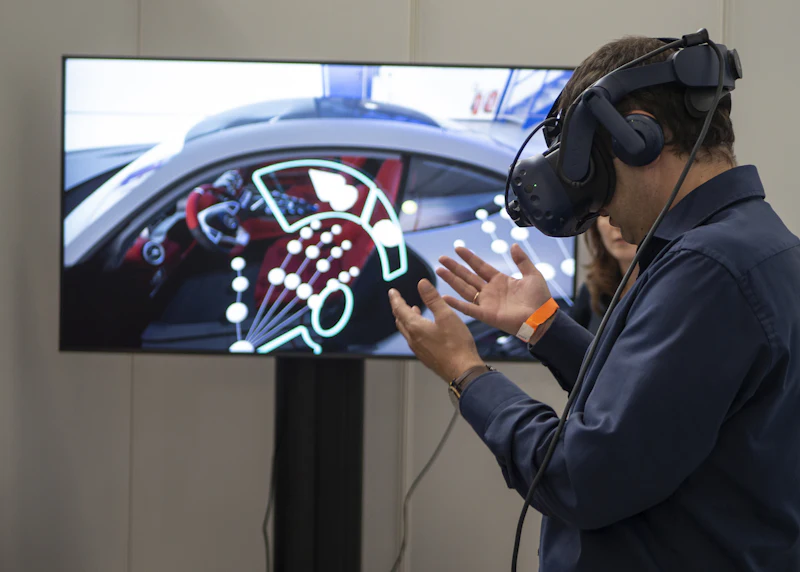
The proliferation of virtual reality (VR) headsets in both entertainment and enterprise environments has prompted significant clinical inquiry regarding their long-term ocular effects. Patients and practitioners alike frequently ask: does prolonged exposure to stereoscopic displays cause permanent vision damage? According to the American Academy of Ophthalmology, there is currently no empirical evidence to suggest that VR headsets cause permanent vision loss or structural ocular damage in healthy adults. However, the unique optical mechanics of these devices can induce a range of transient physiological symptoms, collectively categorized under digital eye strain. To understand why these symptoms occur, we must examine the specific optical phenomena introduced by head-mounted displays and their interaction with the human visual system.
🩺 Ocular Science Verdict: Is VR Bad for Your Eyes?
Here is the clinical consensus summarized from the American Academy of Ophthalmology (AAO) and peer-reviewed journals:
No
No empirical evidence suggests structural or long-term vision loss in healthy eyes.
High
Prolonged sessions trigger temporary fatigue, dry eyes, and headaches due to decoupling.
Caution
Prepubescent binocular pathways are still maturing; sessions must be actively limited.
The Vergence-Accommodation Conflict
The primary anatomical challenge presented by virtual reality is the vergence-accommodation conflict (VAC). In a natural, unobstructed visual environment, the human eye performs two synchronized physiological processes to maintain a clear binocular image. First, the extraocular muscles rotate the eyes inward or outward to align the fovea with the target object, a process known as vergence. Simultaneously, the ciliary muscles contract or relax to change the shape of the crystalline lens, adjusting the focal distance to maintain sharpness—this is known as accommodation. Under normal circumstances, vergence and accommodation are neurologically coupled.
When a user wears a VR headset, this natural coupling is disrupted. The stereoscopic displays are positioned at a fixed, short distance from the eyes—typically only a few centimeters—while specialized optical lenses bend the light to simulate objects at varying focal depths, ranging from a few feet to optical infinity. Consequently, the visual cortex commands the eyes to converge on a distant virtual object, yet the ciliary muscles must maintain accommodation on the physical screen positioned directly in front of the cornea. This artificial decoupling of a deeply ingrained physiological reflex requires continuous neuro-muscular compensation. Over time, this sensory mismatch overworks the oculomotor system, manifesting clinically as asthenopia, severe eye strain, tension headaches, and transient blurred vision. While researchers and hardware manufacturers are actively developing varifocal and light-field displays to mitigate VAC, it remains an inherent limitation of current-generation consumer VR technology.
| Visual Mechanism | Natural Environment (Coupled) | Virtual Reality (Decoupled) |
|---|---|---|
| Vergence (Alignment) | Eyes pivot inwards or outwards matching the exact physical distance of the target. | Eyes pivot to align with simulated virtual elements placed at varying apparent depths. |
| Accommodation (Focus) | Ciliary muscles reshape the natural lens to focus light directly from the physical target. | Ciliary muscles must lock focus on the near physical display screen (fixed focal plane). |
| Neurological Reflex | Vergence and accommodation signals operate in perfect, coupled harmony. | Sensory mismatch occurs, forcing the brain to decouple these deeply ingrained muscular reflexes. |
| Ocular Consequence | Relaxed, natural ocular tracking with minimal baseline fatigue. | High asthenopia, tension headaches, and transient blurriness during adaptation. |
Eye Strain
Temporary fatigue from the vergence-accommodation conflict.
Permanent Damage
No clinical evidence suggests VR causes permanent vision loss in healthy adults.
Common Side Effects of VR on the Eyes
While the risk of permanent ocular damage remains unsupported by current clinical literature, the localized symptoms associated with prolonged VR usage are well-documented. These side effects are primarily mechanical and neurological in nature, driven by the intense demands placed on the visual system.
Dry Eyes and Reduced Blink Rate
One of the most prevalent clinical presentations among frequent VR users is severe ocular surface dryness. Under normal conditions, humans blink approximately 15 to 20 times per minute, continuously distributing a protective tear film across the cornea. However, studies indicate that during tasks requiring intense visual concentration—such as navigating immersive virtual environments—the physiological blink rate can drop by up to 60 percent. This phenomenon, often referred to as a "reduced blink rate," prevents the adequate replenishment of the lipid and aqueous layers of the tear film. The resulting evaporative stress leads to superficial punctate keratitis, characterized by symptoms of burning, gritty sensations, and reflex tearing. The enclosed, climate-controlled micro-environment within the headset further exacerbates tear evaporation.
Motion Sickness and Cybersickness
Cybersickness is a specific subtype of visually induced motion sickness (VIMS) that occurs when there is a profound discrepancy between visual input and vestibular feedback. In virtual reality, the optic nerve transmits signals indicating rapid spatial translation—such as flying or falling—while the vestibular system in the inner ear signals that the body is physically stationary. This sensory conflict triggers the brain's emetic center, leading to a cascade of autonomic responses including pallor, diaphoresis, nausea, and disorientation. Cybersickness is further compounded by hardware latency; even minuscule delays (measured in milliseconds) between head movement and the corresponding visual update on the display can drastically increase the severity of the symptoms.
Eye Twitching and Muscle Fatigue
Prolonged exposure to the unnatural focal demands of virtual reality can result in localized myokymia, commonly known as eye twitching. This involves involuntary, spontaneous contractions of the orbicularis oculi muscle. Myokymia in this context is generally benign and transient, triggered by the sustained hypertonicity of the extraocular and ciliary muscles striving to resolve the vergence-accommodation conflict. The sustained muscular engagement leads to localized lactic acid accumulation and fatigue, which presents as a pervasive aching sensation around the periorbital region. Proper resting intervals are required to allow these muscles to return to their baseline tonicity.
Are VR Headsets Safe for Children?
The pediatric use of virtual reality introduces a distinct set of clinical considerations. Unlike adults, children are in a critical period of visual and neurological development. The American Academy of Ophthalmology and various pediatric health organizations urge caution regarding extended VR exposure for prepubescent children. A primary concern is the potential exacerbation or induction of myopia (nearsightedness) due to extended near-work, though longitudinal epidemiological data specifically isolating VR from general screen time remains nascent.
More crucially, a child's binocular vision, depth perception, and vergence-accommodation reflexes are actively maturing up until the age of 12. Imposing the artificial vergence-accommodation conflict of a VR headset upon a developing neuro-visual system raises theoretical concerns about disrupting the natural maturation of these pathways. While limited short-term exposure (e.g., sessions lasting under 15 minutes) is generally not considered deleterious, manufacturers universally stipulate age minimums—typically recommending against use by children under 13. Parents are advised to strictly monitor session duration, ensure the headset is properly fitted to the child's smaller facial geometry, and monitor for signs of visual fatigue.
Can VR Actually Benefit Your Vision?
Contrary to the focus on adverse effects, virtual reality is increasingly being adopted as a highly effective therapeutic modality in clinical optometry and ophthalmology. The precise control over stereoscopic presentation makes VR an ideal platform for treating certain binocular vision disorders.
Specifically, VR is revolutionizing the treatment of amblyopia (lazy eye) and strabismus (crossed eyes). Traditional occlusion therapy for amblyopia involves patching the dominant eye to force the visual cortex to process input from the weaker eye. This method suffers from low patient compliance and does not inherently train binocularity. Modern VR therapeutics, however, utilize dichoptic presentation—displaying slightly different visual stimuli to each eye. By presenting a high-contrast, critical gameplay element only to the amblyopic eye, and background elements to the dominant eye, the software forces the brain to utilize both eyes simultaneously. This active, binocular approach has demonstrated remarkable efficacy in improving visual acuity and restoring stereopsis, offering a paradigm shift in pediatric and adult neuro-optometric rehabilitation.
How to Protect Your Eyes When Using VR
To mitigate the physiological strain induced by virtual reality, users must adopt proactive ocular hygiene practices. The following clinical recommendations are designed to minimize discomfort and ensure the long-term sustainability of VR use:
- Adhere to the 20-20-20 Rule: To combat ciliary muscle spasm and the vergence-accommodation conflict, users should pause their VR session every 20 minutes, remove the headset, and focus on an object at least 20 feet away for a minimum of 20 seconds. This allows the accommodative system to completely relax.
- Calibrate the IPD (Interpupillary Distance): Proper hardware calibration is non-negotiable. The IPD is the exact distance, measured in millimeters, between the centers of your pupils. The lenses of the VR headset must be physically aligned with your optical centers. An incorrect IPD setting forces the extraocular muscles to constantly strain to fuse the misaligned stereoscopic images, exponentially accelerating visual fatigue and the onset of tension headaches.
- Implement Proactive Lubrication: Given the severe reduction in blink rate during VR immersion, users are advised to instill preservative-free artificial tears prior to donning the headset. This bolsters the lipid layer of the tear film, delaying evaporative disruption and preventing superficial punctate keratitis.
- Enforce Session Limits: The American Academy of Ophthalmology recommends hard limits on continuous usage. An optimal session should not exceed 30 to 45 minutes without a substantial break to allow for the normalization of both muscular tonicity and tear film distribution.
Frequently Asked Questions
Related Articles
 Ashique Hussain— April 25, 2026
Blockchain for Intellectual Property: Legal Admissibility and Technical Reality
 Ashique Hussain— May 15, 2026
The Shift to Self-Hosted: Open Source Alternatives and Software Automation
 Ashique Hussain— May 18, 2026